
Glass teapot with infuser
The reason to buy a glass teapot rather than ceramic is not that it brews better. It is that you can see what is happening, and seeing is how you learn to stop at the right moment.
projected annual growth for leaf tea in North America through 2031
in US tea sales over 52 weeks, up 2.6% year on year
What you are actually buying
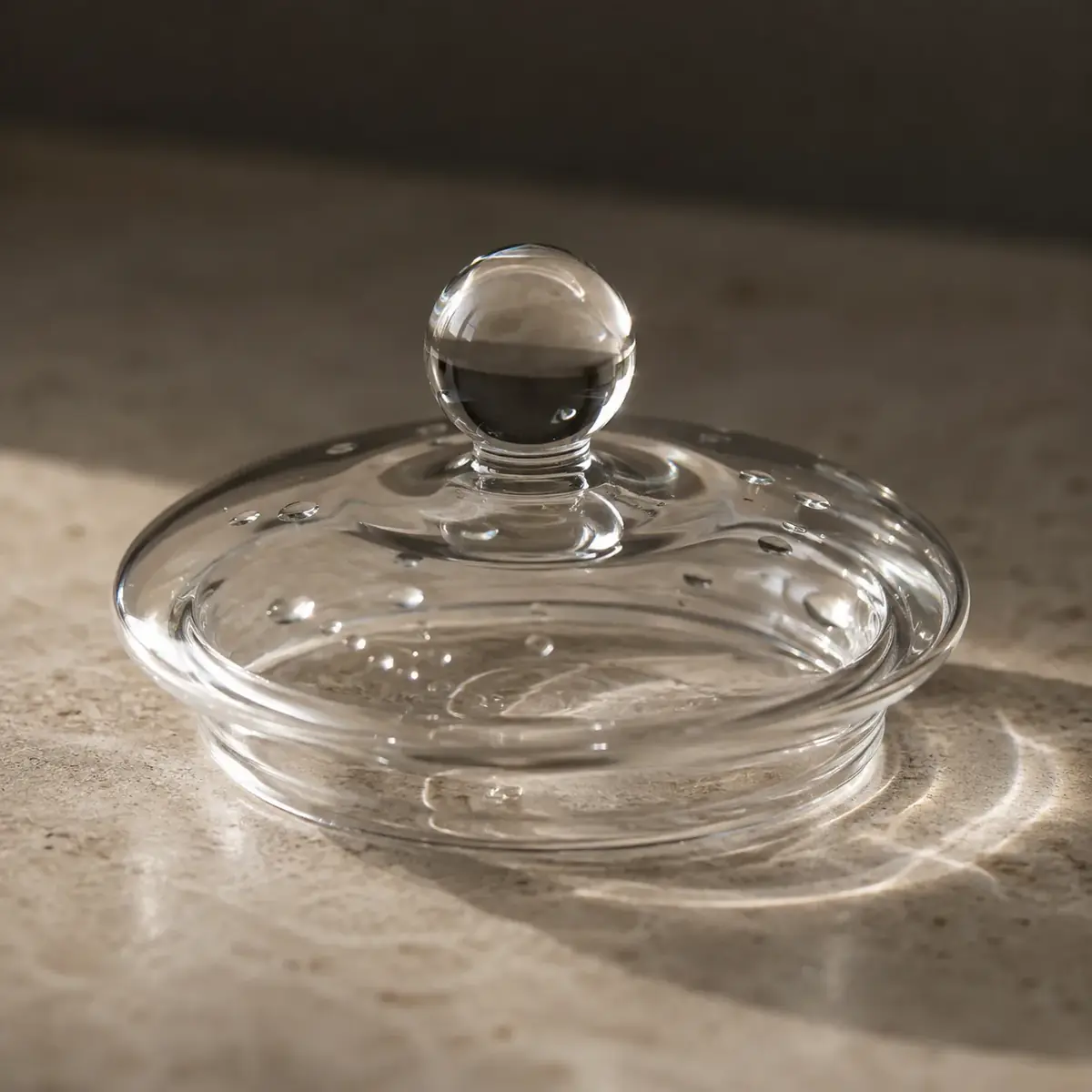
Three parts: a round borosilicate body with a short curved spout and a loop handle, a clear glass lid with a small ball knob, and a cylindrical glass infuser insert that drops into the neck and runs most of the depth of the pot.
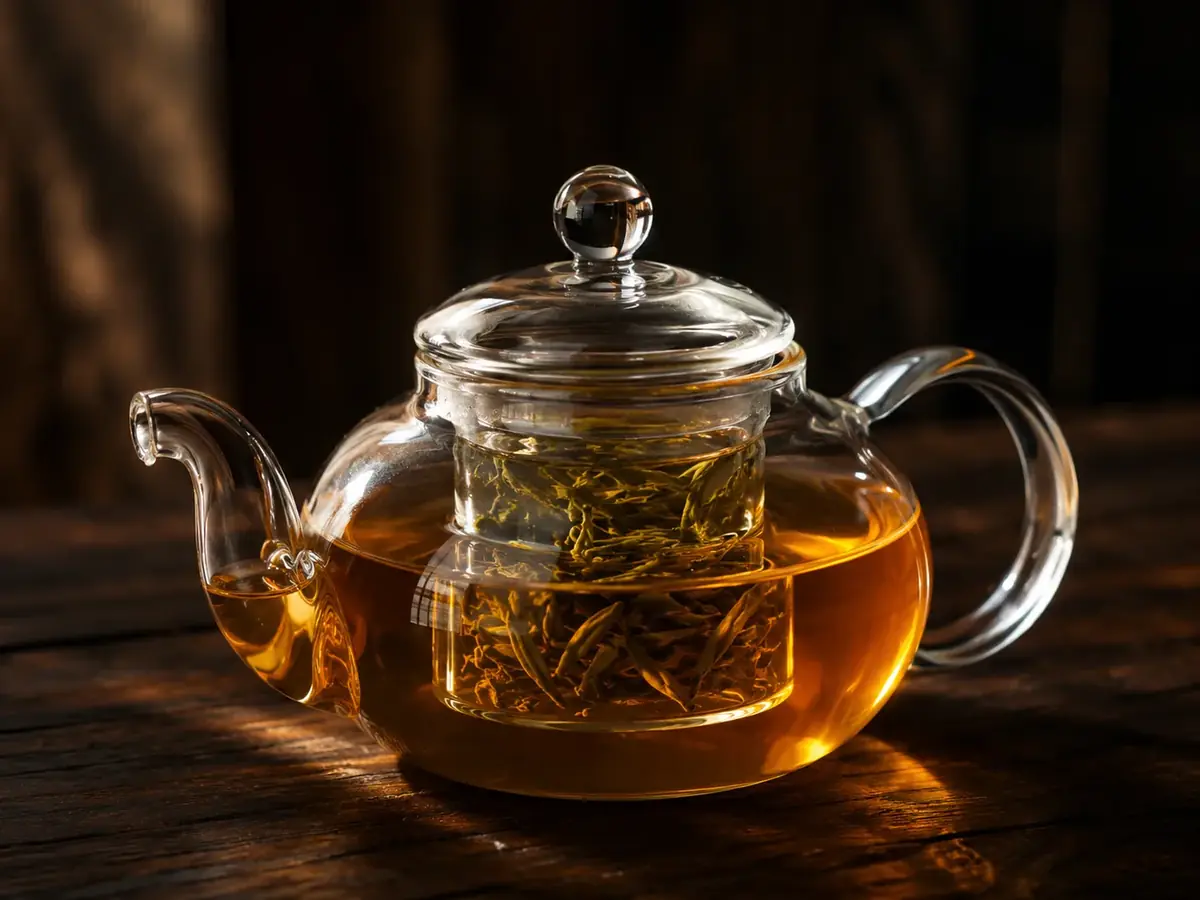
The insert is the part that distinguishes this from a plain pot. Leaves go in it, water goes over them, and when the tea is where you want it you lift the whole insert out. The brew stops. A second cup poured ten minutes later tastes like the first rather than like stewed tannin, which is the failure mode of brewing loose in a pot.
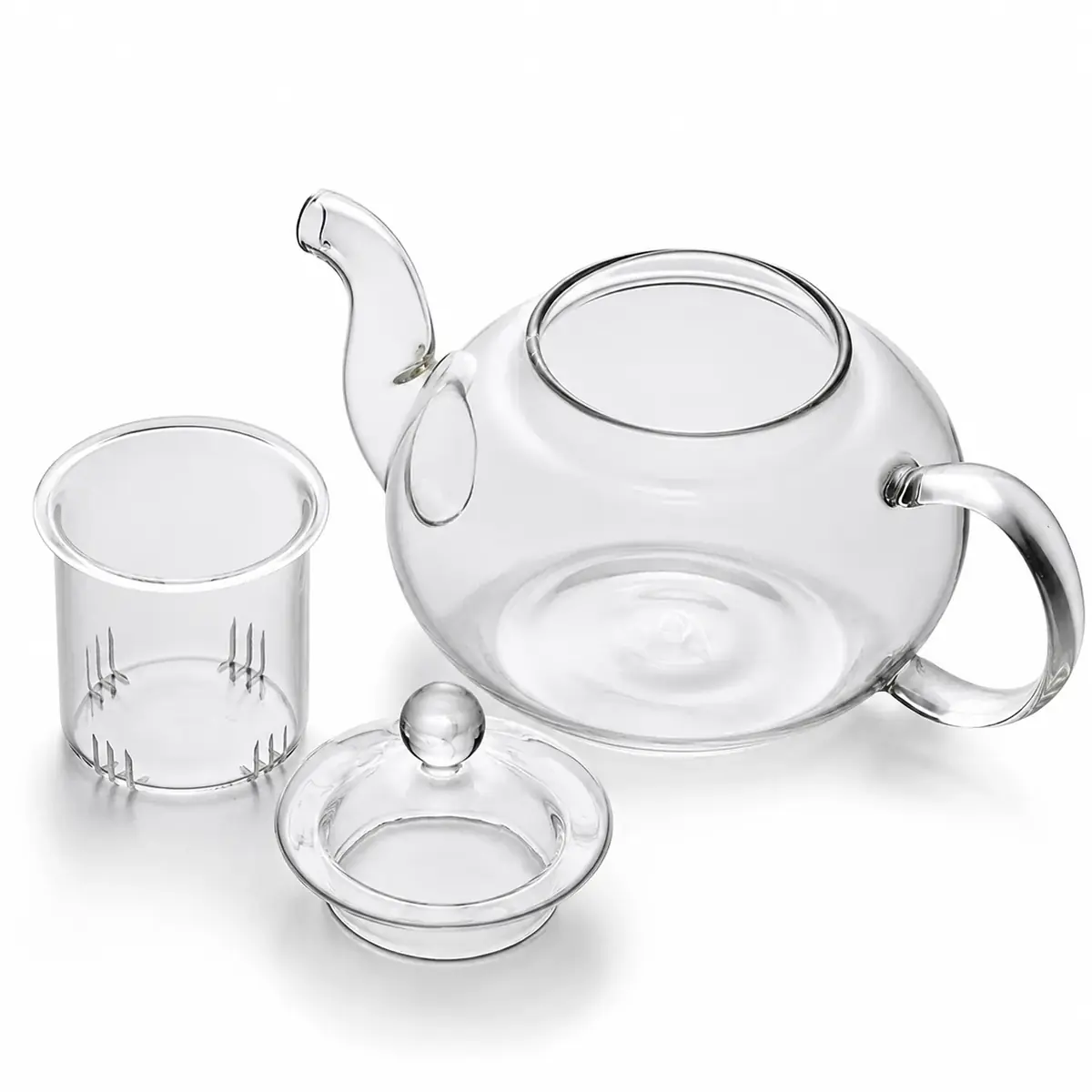
Sizes of the glass teapot with infuser, and what they actually pour
Stated capacities on teapots are brim-full figures. Nobody fills a pot to the brim, and nobody pours 237 ml (8.0 fl oz) cups exactly, so treat these as the arithmetic rather than a promise.
| Size | Stated capacity | Cups of 8 fl oz | Dimensions |
|---|---|---|---|
| Small | 600 ml | about 2.5 | 19.9 cm (7.83 in) wide, 12.5 cm (4.92 in) high, 9.5 cm (3.74 in) base |
| Large | 1000 ml | about 4.2 | — |
Practically: the 600 ml suits one person having two cups, or two people having one each. The 1000 ml is the one to take if you routinely pour for three or four, or if you like a pot to last a whole morning.
Borosilicate, and why it matters here
Borosilicate glass expands far less than ordinary soda-lime glass when it heats, which is why it copes with sudden temperature change that would crack a drinking glass. It is the standard material for laboratory glassware and for teapots, for the same reason.
Two habits still make sense. Pour onto the leaves rather than straight onto cold empty glass, which spreads the heat rather than concentrating it in one spot. And do not take a pot straight from the fridge to boiling water. They are the same courtesies you would extend to any glass. There is more detail in our guide on boiling water and glass teapots.
The visibility argument
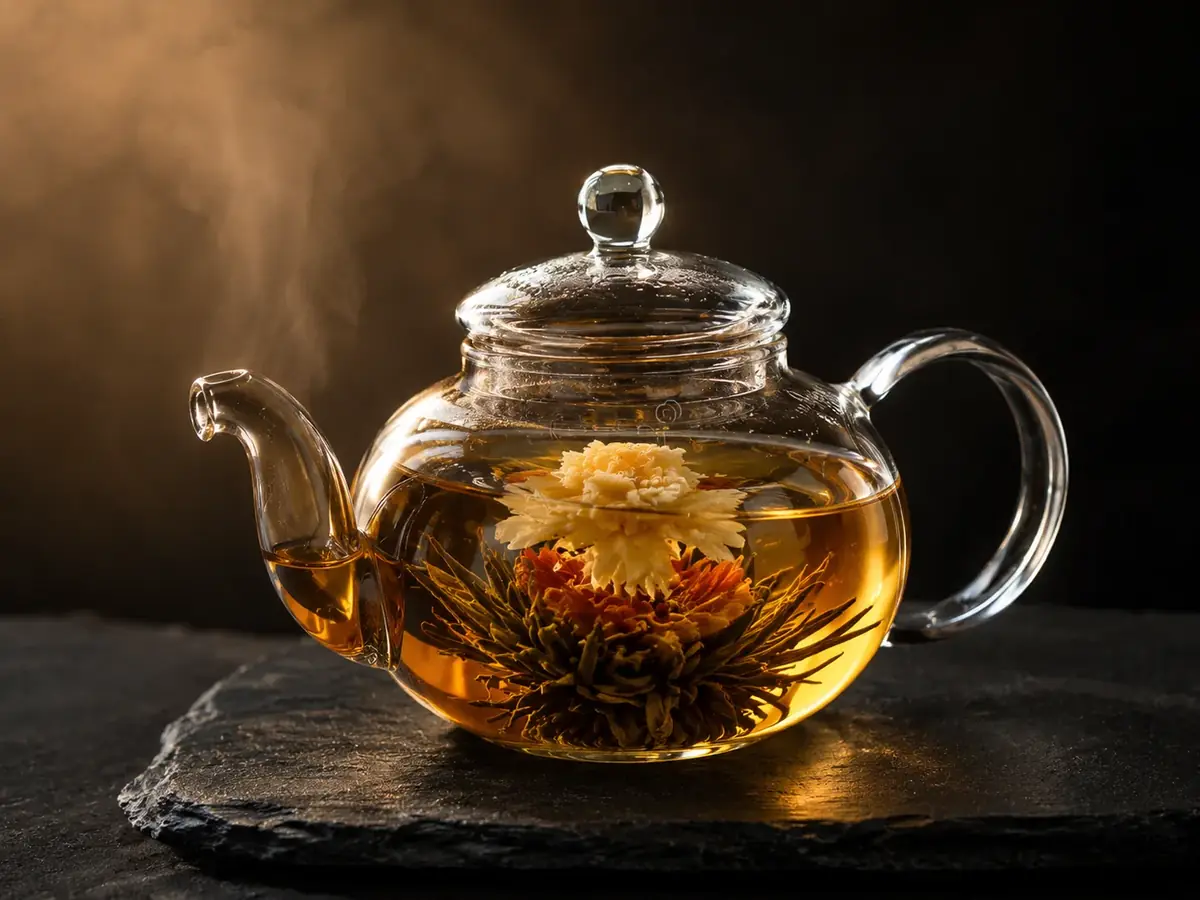
Watching a brew is not decoration. Tea color tracks extraction closely enough that after a week you stop timing and start looking, and you get better cups because you are responding to the leaf in front of you rather than to a rule written for a different tea.
It is also the only sensible pot for blooming tea, where a hand-tied bundle of leaves opens into a flower over a minute or two. In a ceramic pot that happens invisibly, which rather defeats it.
The insert, in detail
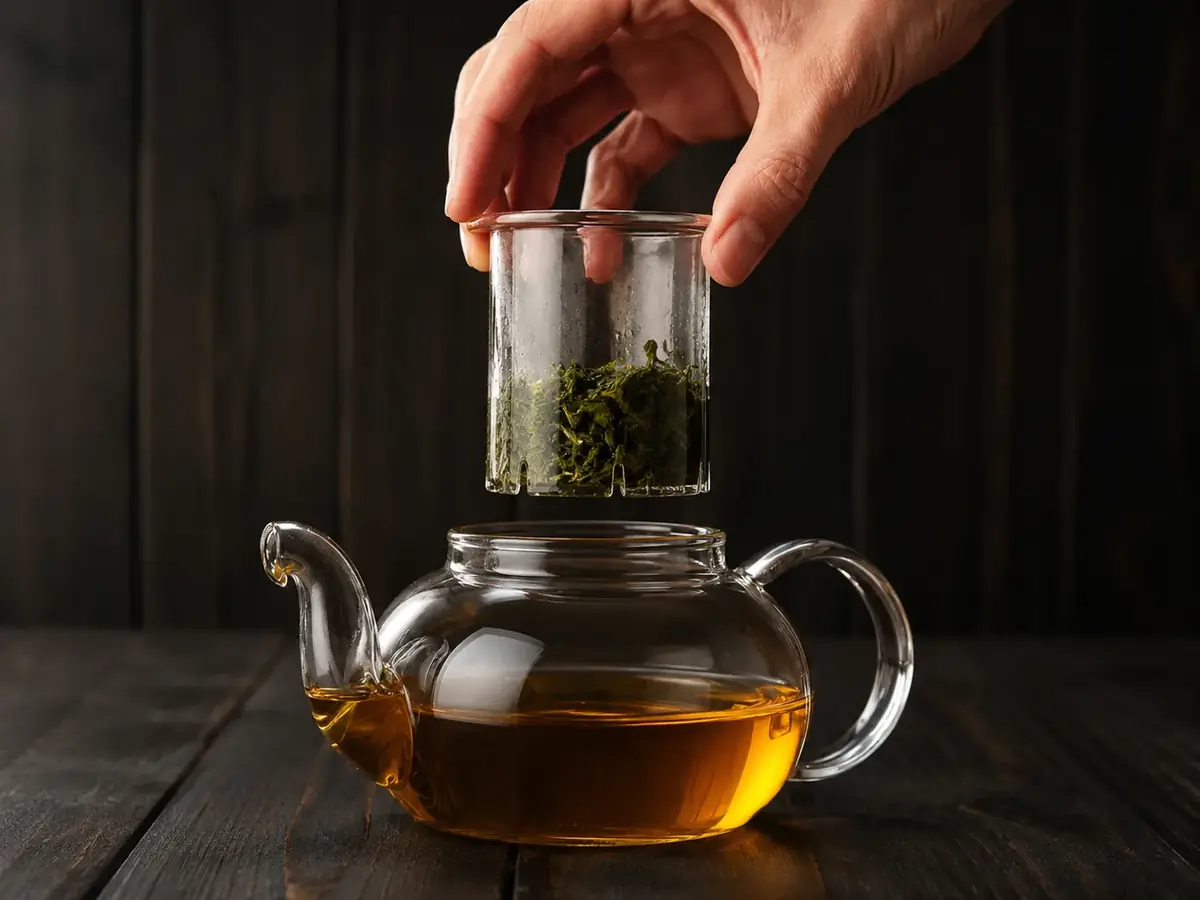
The infuser is a straight-sided glass cylinder that drops into the neck and hangs most of the way down the body. Filtration comes from slots cut near its base rather than from a mesh. In practice it holds whole and broken leaf without trouble; a very fine rooibos will send a little through, and if rooibos is most of what you drink the steel basket filters it better.
Because the insert is full height, the leaf bed sits deep in the water rather than floating at the top. That matters for even extraction: a shallow infuser near the surface only brews the top of the pot properly, and you get a gradient from strong at the top to weak at the bottom until you stir it.
Pouring, and the spout
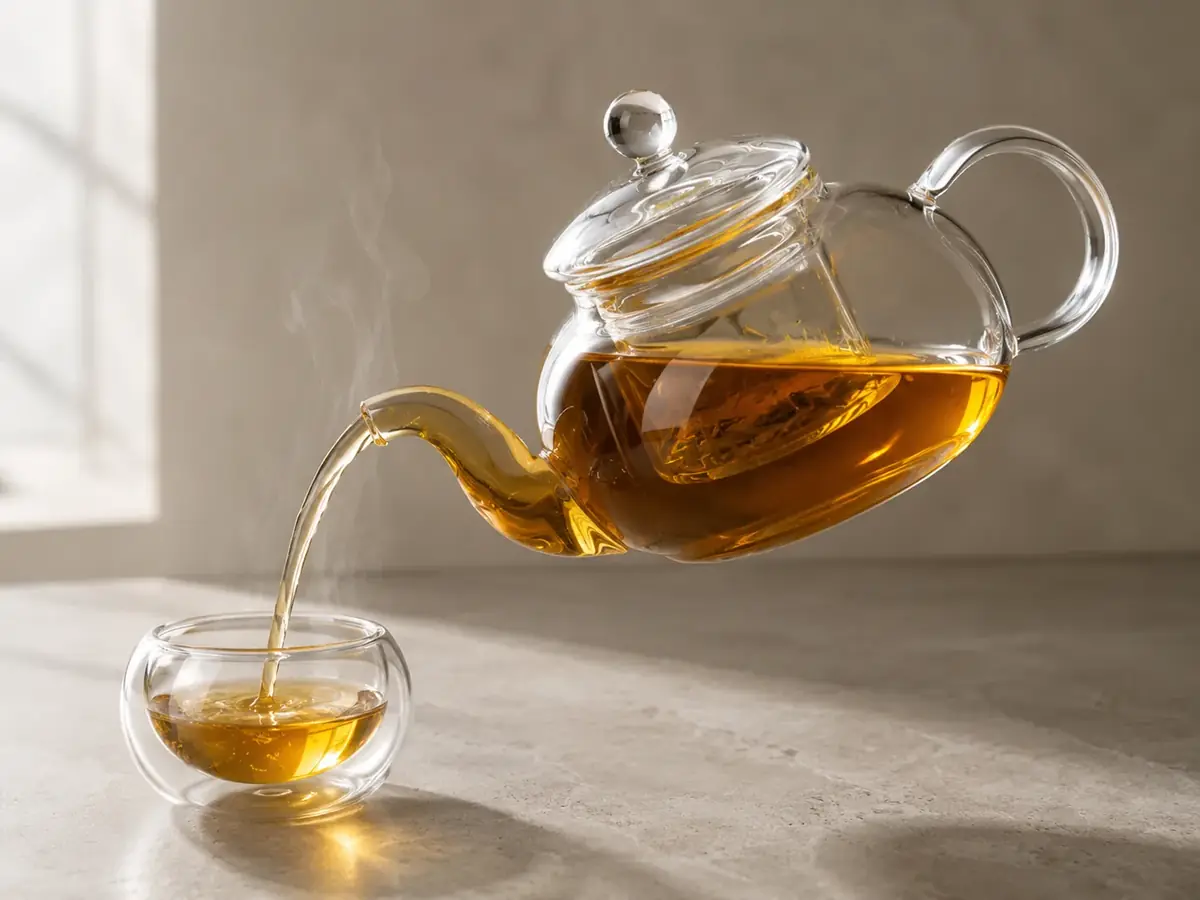
The spout is short and curved rather than long and tapered. A long spout looks elegant and dribbles, because the liquid has further to travel along the underside before it leaves. A short curve breaks the stream cleanly. It is not a subtle difference in daily use — it is the difference between a clean pour and a wet table.
The loop handle is glass, part of the same body rather than attached, so there is no join to weaken and nothing to come loose. It stays cool enough to hold because glass conducts heat poorly, which is the same property that makes the pot itself a decent insulator: tea in a glass pot holds temperature better than most people expect.
Heat, and how long a pot stays drinkable
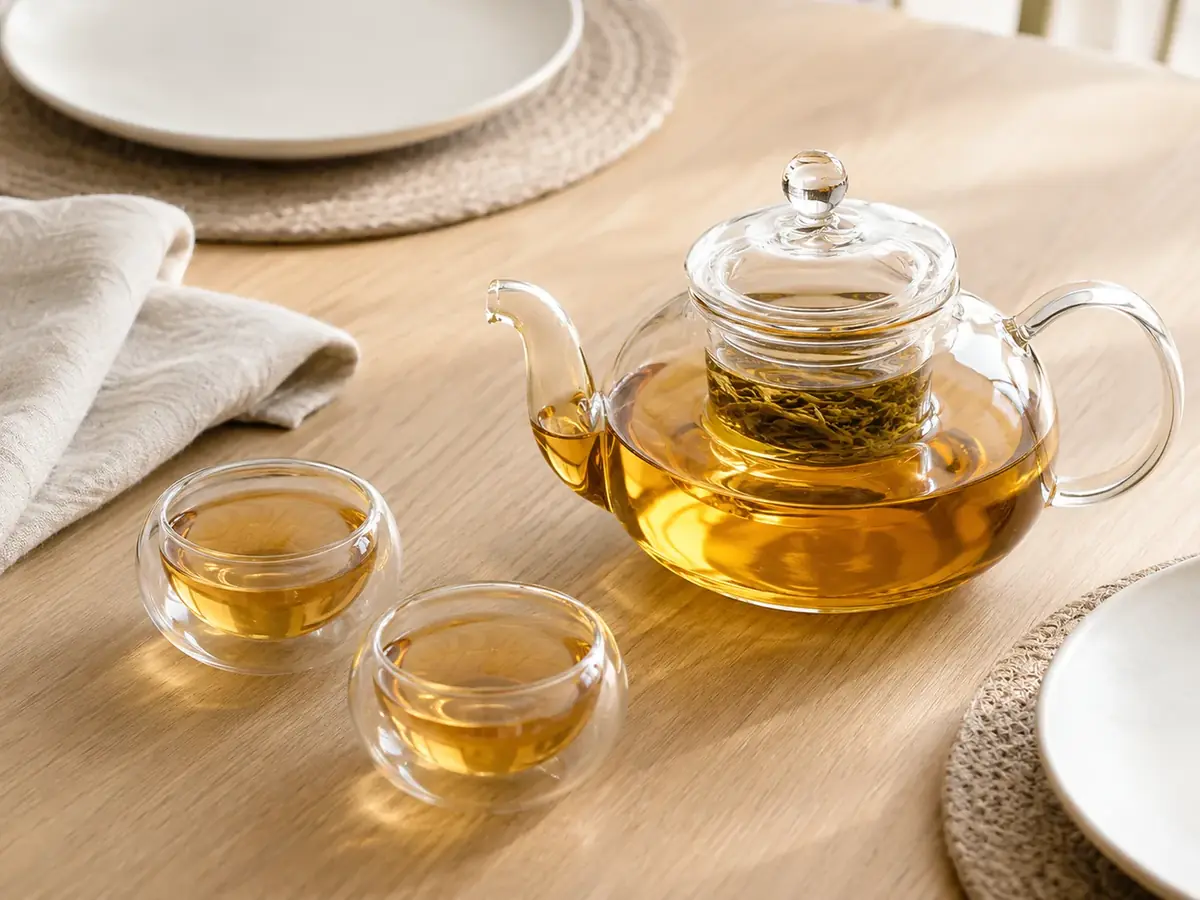
Glass conducts heat poorly, which works in your favor here: the body of the pot is a reasonable insulator and tea holds temperature longer than most people expect from something they can see through. Preheating helps and costs nothing — swirl a little hot water in the empty pot, tip it out, then brew. A pot that starts warm loses less to the glass itself in the first minute, which is when most of the drop happens.
Covering matters too. The lid is not decorative: with it on, a 600 ml pot stays comfortably drinkable for the twenty or thirty minutes it takes to work through two cups.
And the thing no other material offers stays true throughout — you can see the tea. For anyone still working out how long their particular leaf wants, that feedback is worth more than any timer.
Cleaning the glass teapot with infuser, in one minute
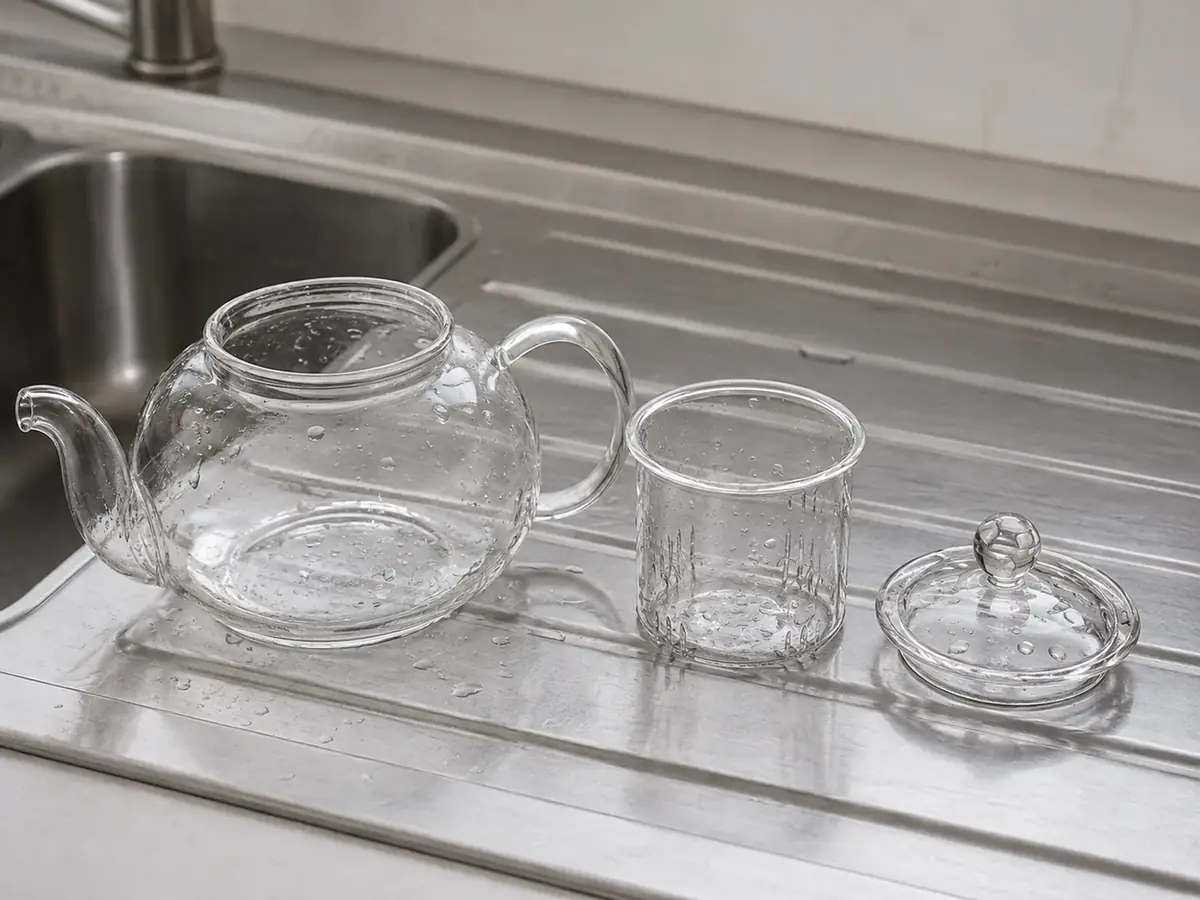
Glass shows everything, so you always know when it wants a rinse. The routine is simple — lift the insert out, tip the leaves, rinse both parts under running water. All three pieces come apart completely, so there is no trapped corner where tannin accumulates.
Over months, hard water can leave a haze. Warm water with a little citric acid or white vinegar clears it and does not harm borosilicate. Avoid abrasive pads, which scratch glass permanently and give future residue a grip.
Glass teapot with infuser, or basket?
If you drink alone and one cup at a time, the basket is cheaper, faster and washes in seconds. The pot earns its place when you are pouring more than one cup, or when the seeing matters to you.
If what you want is tea away from the kitchen, neither is the answer — the double-wall infuser bottle is, because it separates the leaves from the drink for the whole journey.
All three carry the same idea: give the leaf room, filter finely, and let the person brewing decide when to stop.
Questions about the glass teapot with infuser
Can you put boiling water in a glass teapot?
Borosilicate glass is designed for it and tolerates sudden temperature change far better than ordinary glass. Pour onto the leaves rather than onto bare cold glass, and avoid going straight from the fridge to boiling water. Both are ordinary courtesies you would extend to any glass.
What does a glass teapot give you?
Sight of the brew, which is the fastest way to learn when to stop. Watching color develop teaches you a tea in days where timing takes weeks, and it is the only way to enjoy blooming tea, where a hand-tied bundle opens into a flower in the pot. Borosilicate glass also holds temperature better than its thinness suggests.
Is the glass teapot stovetop safe?
We do not warrant these pots for stovetop or direct flame use, so brew by pouring hot water in rather than heating the pot on a hob. Borosilicate handles poured boiling water without difficulty; direct heat on a burner is a different kind of stress and not something we can guarantee for this product.
How many cups does the 600 ml teapot make?
About two and a half cups of 8 fl oz, which in practice means two generous cups or three small ones. The 1000 ml pot comes to about four and a quarter cups on the same arithmetic. Both are brim-full capacities, so allow a little less in real pouring.